
Table of Contents
- Why Your Adelaide Electricity Bill Is Higher Than It Should Be
- How to Reduce Electricity Costs Adelaide: Step-by-Step
- Energy Efficiency Tips for Home That Work in Adelaide’s Climate
- Government Energy Rebates Available in South Australia
- Solar Panel Installation Benefits for Adelaide Homeowners
- Renters and Smart Home Options to Cut Costs
- Your Next Step to Lower Power Bills
- Frequently Asked Questions
Last Updated: September 8, 2026
Why Your Adelaide Electricity Bill Is Higher Than It Should Be
Most Adelaide households overpay because they remain on a standard standing offer rather than a competitive market offer. Understanding how to reduce electricity costs Adelaide starts with recognising that the biggest savings come from changing your plan and habits, not just from using less power.
At MLG Electrical & Solar, our team has over a decade of experience in electrical and solar solutions, helping South Australian homeowners cut energy bills through practical electrical upgrades and solar installation. The average home uses most electricity during peak demand windows in the late afternoon and evening, when power costs the most per kilowatt-hour.
You do not need to overhaul your lifestyle. Small, targeted changes to when you use energy, how your home holds thermal comfort, and which retailer you pay can reduce electricity costs without sacrificing comfort.
How to Reduce Electricity Costs Adelaide: Step-by-Step
Step 1: Understand Your Tariff and Bill
Your electricity bill contains the key to your savings: your tariff type. A residential tariff is the pricing structure your retailer applies, determining how much you pay per kilowatt-hour at different times of day.
Look for whether you are on a single-rate tariff, where power costs the same all day, or a time-of-use tariff, where prices vary between peak, off-peak, and shoulder periods. If you have a smart meter but remain on a single-rate plan, you may be missing out on cheaper off-peak rates for running appliances overnight.
Step 2: Shift Usage to Off-Peak Times
Once you know your tariff, the next step is load shifting: moving high-energy activities into cheaper windows. This is one of the most cost-effective ways to reduce electricity costs without buying new equipment.
Set your dishwasher, washing machine, and dryer to run overnight or mid-day when off-peak tariffs apply. If you have electric hot water, check whether it heats during off-peak hours. Simple habits, like charging devices and running the pool pump after 10pm, can noticeably lower your next bill. Focusing on the two or three biggest energy users delivers most of the benefit.
Step 3: Switch to a Better Market Offer
Your retailer’s standing offer is a starting point, not a finishing line. Market offers are competitively priced plans that often include discounts for paying on time or agreeing to a fixed rate. Comparing plans from other providers can be done online in minutes.
When comparing, look beyond the headline discount. Check the variable rate per kilowatt-hour, daily supply charges, and contract terms. A plan with a lower usage rate but higher supply charge may not suit a household with low overall consumption. If you have solar panels, also compare the solar feed-in tariff.
Energy Efficiency Tips for Home That Work in Adelaide’s Climate
Adelaide’s climate is defined by extremes: scorching summer heat and cool, damp winters. The most effective energy efficiency tips for home target the two biggest sources of energy consumption: heating and cooling.
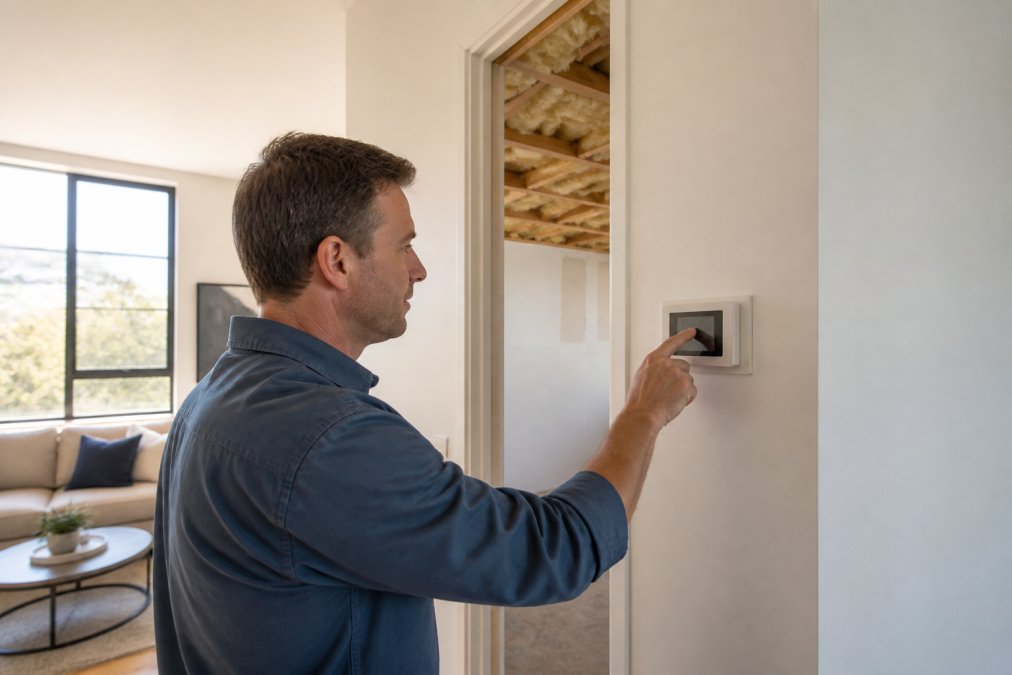
Heating and cooling typically account for the largest share of household energy consumption (energy.gov). In summer, aim for 24 to 26 degrees Celsius rather than icy cold, and in winter, 18 to 20 degrees is sufficient for most homes. Each degree of difference can shift your energy consumption noticeably over a billing cycle.
Beat the Summer Heat Without Breaking the Bank
Before reaching for the air conditioner, consider what your home is doing with the sun. Closing curtains and blinds on north and west facing windows during the hottest part of the day can keep a room several degrees cooler. Ceiling fans use a fraction of the power of an air conditioner.
Using your air conditioner efficiently is also about timing. Pre-cool your home in the early morning when temperatures are lower and the unit works less hard. During a heatwave, set the thermostat to a consistent temperature rather than switching the unit off and on.
Adelaide’s Heatwave Playbook: A Week-by-Week Strategy
Adelaide’s heatwaves are multi-day stretches of 35°C-plus temperatures that test both your home and your energy budget. A common pattern is for households to see their highest quarterly bill after a February heatwave, due to the cumulative load of running cooling for a week straight. To manage this, consider a staged approach:
- Day One (Pre-Heat): The night before a forecast heatwave, run your home’s ‘night purge’. Open windows and use fans to draw in cool night air, dropping the internal temperature of your home’s thermal mass (brick walls, concrete floors) by several degrees. This gives your air conditioner less work to do the next day.
- Day Two (Peak Heat): Close all windows and curtains by mid-morning. Set your air conditioner to 26°C, not lower. Every degree below 24°C can increase your cooling energy use by up to 10%. If you have ceiling fans, use them in occupied rooms; they allow you to raise the thermostat setting by 2-3°C without noticing a difference in comfort.
- Day Three and Beyond (Sustained Heat): If the heatwave persists, your air conditioner will be running near-continuously. This is the time to check your tariff. If you are on a time-of-use plan, consider pre-cooling your home aggressively during the cheaper ‘shoulder’ period in the early morning (around 9am-11am), then letting the temperature drift up slightly during the peak afternoon window (typically 4pm-8pm in SA) before bringing it back down. This ‘thermal banking’ strategy shifts your heaviest energy use into cheaper windows.
Draught Sealing and Insulation Basics
Draught sealing is one of the cheapest and most effective upgrades available. Gaps around doors, windows, and power points let conditioned air escape and outside air in, forcing your heating and cooling system to work harder. Sealing these gaps with weather strips and silicone is a low-cost DIY job.
Insulation works year-round, keeping heat out in summer and trapping warmth in winter. Ceiling insulation is the most important layer in an Adelaide home, as hot air rises and escapes through an uninsulated roof in winter, while radiant heat pours in during summer. Upgrading old or inadequate insulation is one of the best long-term investments for both thermal comfort and lower bills.
Adelaide’s summer sun is low in the north and high in the west. External shade structures (awnings, pergolas, deciduous vines) on north-facing windows are more effective than internal curtains, as they stop the heat before it enters the glass. For renters, temporary external shade using shade cloth or outdoor blinds can be installed without structural changes.
Government Energy Rebates Available in South Australia
South Australian households can access several government energy rebates designed to ease the cost of power. These schemes change periodically, so checking current criteria is essential before you plan a purchase.
The main support mechanisms include the energy bill concession for eligible concession card holders, which provides a direct discount on electricity bills, and various incentives for installing energy-efficient appliances or solar systems (sa.gov.au). Details and eligibility requirements are published by the state government.
Contact your retailer directly to ask if you are receiving every concession you qualify for. Retailers do not always apply concessions automatically when you switch plans, and you may need to re-register after changing providers.
For seniors and pensioners, these rebates can make a meaningful difference. If you are on a tight budget, check your eligibility before committing to any upgrade, as some rebates require the work to be done by an approved provider.
Solar Panel Installation Benefits for Adelaide Homeowners
Solar panel installation benefits extend far beyond the obvious reduction in grid electricity use. For Adelaide homeowners, a well-sized system can dramatically reduce electricity costs by generating power during the day when your home is active, then exporting excess energy to the grid for a feed-in credit.
The financial case depends on your consumption patterns and roof orientation. A system sized to match your daytime usage delivers the best return, as you are effectively replacing grid power with free solar generation. Adding a battery lets you store that daytime generation for evening use, when most households face peak demand charges.
The most valuable solar energy is the energy you use yourself. Exporting to the grid earns a feed-in tariff, but offsetting your own consumption at the retail rate is worth several times more per kilowatt-hour.
Choosing the right installer matters as much as choosing the right system. A family-owned business with electricians who prioritise technical expertise over salesmanship will design a system around your actual needs. Proper installation ensures your system performs as expected for decades.
Renters and Smart Home Options to Cut Costs
Renters face a unique challenge: they cannot install solar panels or upgrade insulation in a property they do not own. However, there are still meaningful ways to reduce electricity costs Adelaide renters can use without structural changes.
Portable solutions include smart power boards that eliminate standby power, the energy devices draw even when switched off. Many appliances continue consuming small amounts of power around the clock, and this standby load can add up across a household. Switching devices off at the power point when not in use is free and effective.
Smart home automation offers another layer of control. Programmable timers and smart plugs can switch off air conditioners, heaters, and entertainment systems on a schedule, preventing energy waste when nobody is home. For renters, these devices are removable and can be taken to the next property.
Before installing any smart device that connects to your home’s wiring, such as a smart thermostat for ducted heating, check your lease agreement. Hardwired changes typically require landlord approval, and unauthorised modifications can put your bond at risk.
If your rental has poor insulation or draughts, raise the issue with your landlord. Many property owners are willing to make energy efficiency improvements, particularly if you can show how the upgrade adds value to the property.
The Smart Home Energy Management System (EMS) Approach
Moving beyond individual smart plugs, a whole-home energy management system (EMS) coordinates multiple devices to optimise your energy use automatically. While full EMS installations are typically for homeowners, renters can approximate the benefit using a central smart hub connected to smart plugs and a smart thermostat (where permitted). The key mechanism is ‘automation routines’:
- Geofencing: Your smart hub uses your phone’s location to detect when you leave and arrive. When you leave, a routine can switch off all connected appliances, heaters, and entertainment systems. When you return, it can pre-cool or pre-heat the home to your preferred temperature, but only for the specific rooms you use.
- Occupancy-based scheduling: Instead of running a heater on a fixed timer, use motion sensors in smart plugs to only power devices in rooms that are actually occupied. This prevents energy waste in empty rooms, a common pattern in households where people forget to switch off the living room heater when moving to the bedroom.
- Cost-aware charging: If you are on a time-of-use tariff, program your smart devices to only run during off-peak windows. For example, set your smart plug for the electric blanket to turn on at 2am rather than 9pm, so it is warm when you get into bed but only draws power during the cheap window.
EV Charging Optimisation: The Missing Piece for Adelaide Drivers
Most energy-saving guides ignore the growing impact of home electric vehicle (EV) charging. If you own or are considering an EV, your charging habits can either double your electricity bill or be one of the cheapest ways to power your car. The critical factor is your tariff structure and your charging schedule.
Adelaide’s major retailers offer time-of-use tariffs with significantly cheaper off-peak rates, often between 10pm and 7am. Charging a typical EV (with a 60kWh battery) from empty to full at a standard 7kW home charger during peak times could cost several times more than doing the same charge overnight on an off-peak rate (energy.gov). The difference can be more than $15 per full charge.
Here is the practical approach for renters and homeowners alike:
- Check your charger’s scheduling capability: Most modern wall chargers (and even the portable ‘granny chargers’ that plug into a standard 10A outlet) have a scheduling feature in their companion app. Set this to start charging at 10pm or later.
- Use the car’s built-in timer: If your charger does not have scheduling, most EVs have a departure timer in the car’s settings. Tell the car when you need it ready, and it will calculate the optimal charging window to finish just in time, prioritising off-peak hours.
- Avoid the 4pm-8pm peak window: In South Australia, the peak demand window is typically late afternoon to early evening. Plugging in your EV when you get home from work at 5pm and letting it charge immediately is the single most expensive way to charge. Even a simple delay of a few hours can halve the cost per charge.
- Consider a dedicated EV tariff: Some SA retailers now offer specific EV tariffs with a very low overnight rate (sometimes below 10 cents per kWh) in exchange for a higher daily supply charge. If you drive more than 15,000km per year, this tariff structure can be significantly cheaper than a general time-of-use plan, even with the higher supply charge.
The cheapest ‘fuel’ for your EV is the electricity you consume during off-peak hours. A simple scheduling change can save an Adelaide EV driver more than $300 per year, without any change to driving habits or lifestyle.
Your Next Step to Lower Power Bills
Reducing your electricity costs in Adelaide is not a single action but a series of informed decisions. Start by understanding your tariff, shift your usage to off-peak times, and compare market offers to find a better rate. From there, tackle the home efficiency upgrades that suit your situation, whether you own your property or rent, and investigate the solar options that match your consumption.
The order matters. Tariff and usage changes cost nothing and deliver immediate savings. Insulation and draught sealing require a modest investment with ongoing returns. Solar is the larger commitment that can transform your bills over the long term, but only when the system is correctly sized and professionally installed.
For homeowners ready to make the switch to solar, or anyone needing expert advice on their electrical setup, the team at MLG Electrical & Solar brings over a decade of experience to residential and commercial projects across Adelaide. Our qualified electricians focus on technical excellence, and we offer special discounts for elderly customers plus 24/7 emergency support. Contact us today for a system designed around your actual energy needs.
Frequently Asked Questions
What time is electricity cheapest in Adelaide?
Electricity is cheapest during off-peak periods, typically between 10pm and 7am on a time-of-use tariff. Some providers also offer a shoulder period in the late morning or early afternoon. Running your dishwasher, washing machine, or electric hot water system during these hours can reduce electricity costs Adelaide households feel on their bills. Check your bill or contact your retailer to confirm your specific off-peak windows.
What appliances consume the most electricity in a typical home?
Heating and cooling systems are the biggest users, followed by hot water systems and the clothes dryer. An older fridge running constantly can also add significant cost. Switching to energy-efficient appliances with a high star rating, using the dryer less in summer, and setting your air conditioner to 24 degrees instead of lower can make a noticeable difference to your annual energy consumption.
Are there government rebates available to help with energy costs?
Yes. South Australian households can access the national Energy Bill Relief Fund rebate, applied directly to your electricity account. The SA government also offers the Retailer Energy Productivity Scheme (REPS), which provides incentives for energy-efficient appliances and upgrades. If you install solar panels, you can earn a solar feed-in tariff for surplus power sent to the grid. Check eligibility requirements for each scheme.
How does solar panel installation impact long-term energy expenses?
Solar panel installation benefits include generating your own power during daylight hours, which directly offsets the kilowatt-hours you would otherwise buy from the grid. Over a system’s 25-year lifespan, the savings on your electricity bills typically outweigh the upfront cost. To maximise the financial benefit, pair your panels with a battery to store excess energy for evening use, and ensure the system is sized correctly for your household’s consumption patterns.
This guide was published by MLG Electrical & Solar. For current pricing and system recommendations, visit our website or call our team to discuss your specific requirements.